Design for recycling:
Maximum standardization
Within our agency and with our customers, there are always two opposing camps when it comes to the question of perfect packaging: The advocates of aesthetics argue in favor of “design for selling”, while the ecologists among us demand “design for recycling”. While the former aims to stand out with a design that is as unique as possible, recycling-friendly design benefits above all from standardization. Pool systems, such as for beer bottles, already ensure that packaging can be better managed in the cycle. So why not simply standardize everything?
Standardization doesn’t have to mean that the look of the packaging suffers – as our design for “bean” in collaboration with the start-up Circolution shows.
The stainless steel cup looks high-quality and the large paper labels leave enough space for communication and design. After use, the cups can be returned to the deposit machine and redesigned for any other brand. Nestlè is also testing the concept. After cocoa powder was packaged in them in 2023, the “Chocolate Balls” of the Lion and Kit Kat brands followed in 2024.
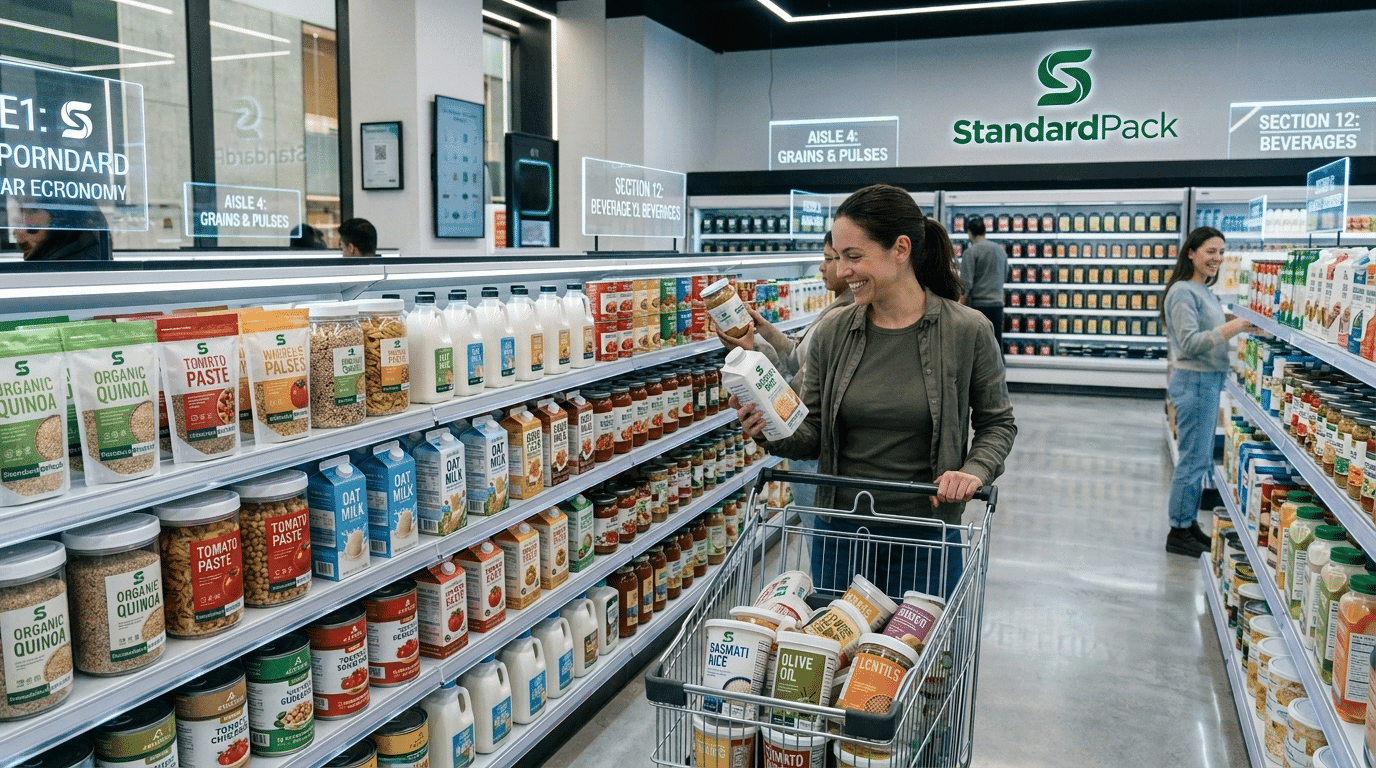
Let’s imagine a trip to the supermarket where the packaging is completely standardized. As you walk through the aisles, you no longer see individual brand-specific designs, but rather a manageable number of universal, reusable containers made of sturdy glass, stainless steel, and high-strength recycled material. The shampoo bottle is indistinguishable from the ketchup container in terms of dimensions and feel; canned goods, juices, and laundry detergent all use identical, stackable pool jars and canisters. Manufacturers’ branding is applied exclusively via easily removable, digital smart labels that are applied only during the filling process. After use, all containers are placed—without prior sorting—into standardized return machines, from where they go directly to regional large-scale washing facilities and are refilled across all manufacturers. Brand identity is entirely conveyed through label design and content—while packaging logistics, thanks to maximum standardization, save millions of metric tons of waste and CO₂.
Not a bad idea, but pooling systems remain the exception, especially in markets outside the German deposit-refund system. Most manufacturers do not want to give up packaging design and materials as a distinguishing feature.