The triumph of fibers
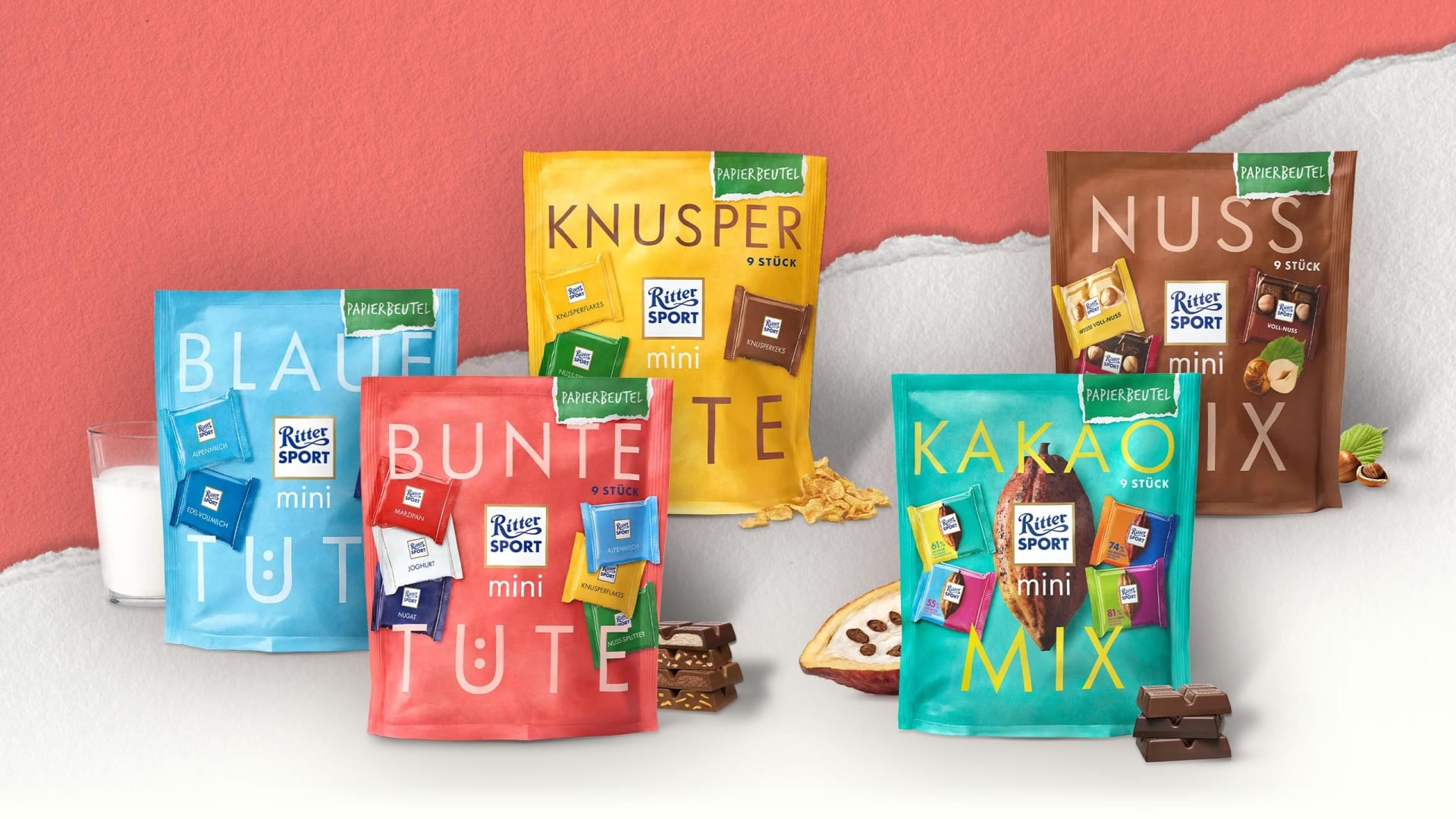
Two major influencing factors have led to plastic packaging being increasingly replaced by fibre-based alternatives. On the one hand, paperization or fiberization is driven by consumer demand, and on the other hand, the paper industry is the big winner of the PPWR regulation. While the plastics industry is facing criticism and working hard to establish better recycling systems, many brands are fully committed to switching to paper. Alfred Ritter, for example, had already switched the outer packaging for its Minis as early as 2022. We had the opportunity to contribute to the design of this change as part of the Ritter Sport mini relaunch.
Companies to watch:
Wherever the barrier requirements allow, the high-performance securities come into play, which are now offered in a wide range of variants from small start-ups to large players. These replace plastic thanks to an ultra-thin barrier layer that can be reliably removed during the paper recycling process. According to the definition, it is not a composite material if >95% of the packaging consists of paper fibers. The rest is coating, printing ink and, if necessary, varnish. As long as these are within the permissible proportion of impurities, they have a minor effect on the quality of the paper recycling. However, as the amount of barrier paper in waste paper increases, the recycling industry faces a challenge. The final task for these promising packaging solutions is therefore to further reduce the proportion of impurities and adapt them to the recycling process.