Reusable instead of mountains of waste
Fast food restaurants, as places of quick consumption, are rarely a role model for sustainable solutions. The French McDonald’s branches no longer conform to this cliché – albeit not entirely voluntarily.
Since January 1, 2023, all catering establishments in Germany have been required to offer reusable packaging. It demands precisely such solutions for businesses that have more than 80m2 of sales space or employ more than 5 people. In addition to the usual disposable solutions in the take-away sector, a reusable alternative must therefore be offered. Containers brought in by customers themselves must also be accepted. In an initial résumé around a year after the introduction of the law, the main criticism was the interest and commitment of consumers. Although some restaurateurs have equipped themselves accordingly, customers still prefer the less environmentally friendly disposable container.
So while Germany is still struggling with reusable packaging, France is going one step further. The French government wants to ban single-use plastic packaging in stages by 2040. After straws, plates, cups and cutlery had already disappeared from supermarket shelves, the next step was introduced in 2023 – disposable tableware is no longer permitted in fast food restaurants with more than 20 seats. The law came into force on 01.01.2023 and affected around 30,000 restaurants across France.
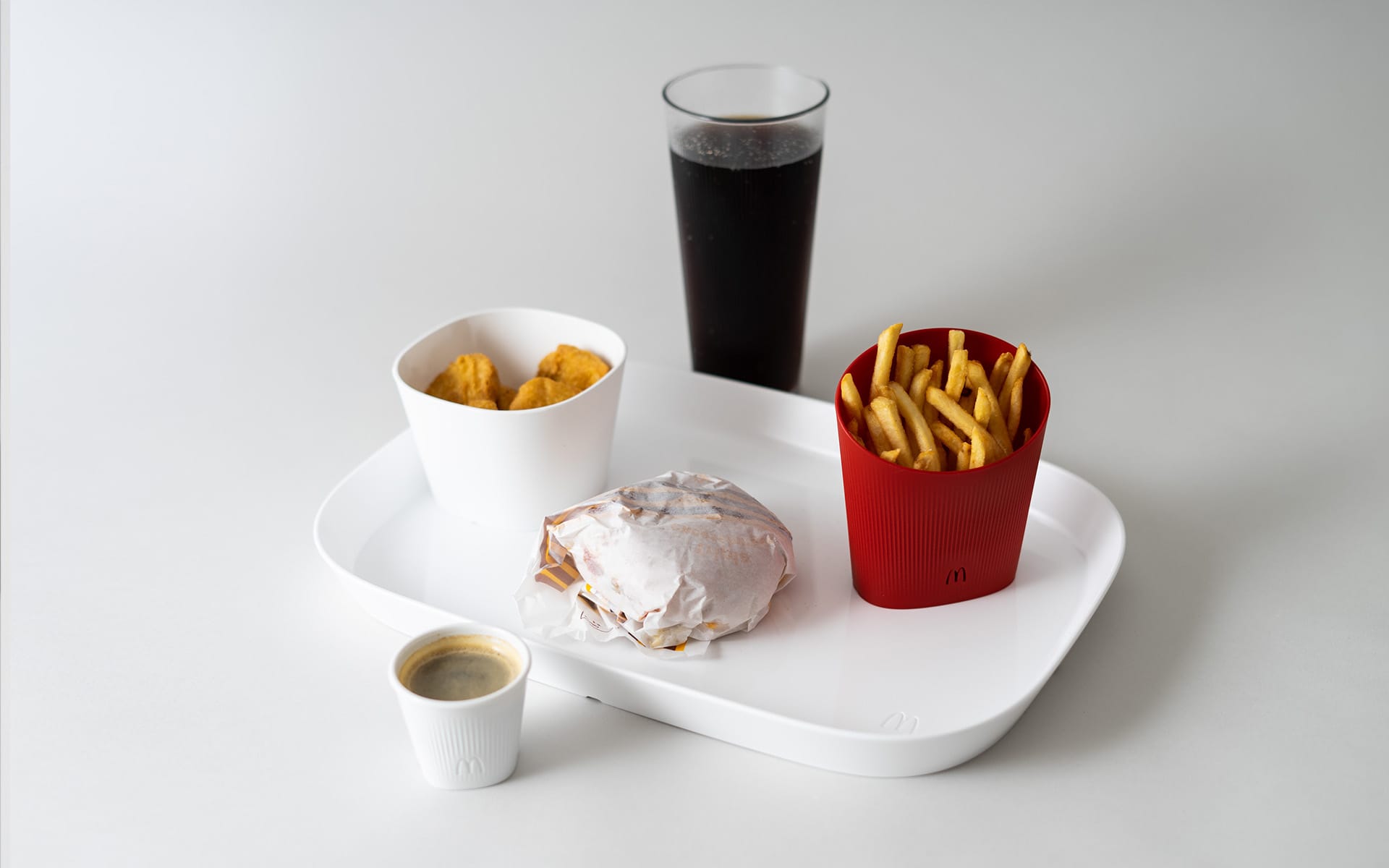
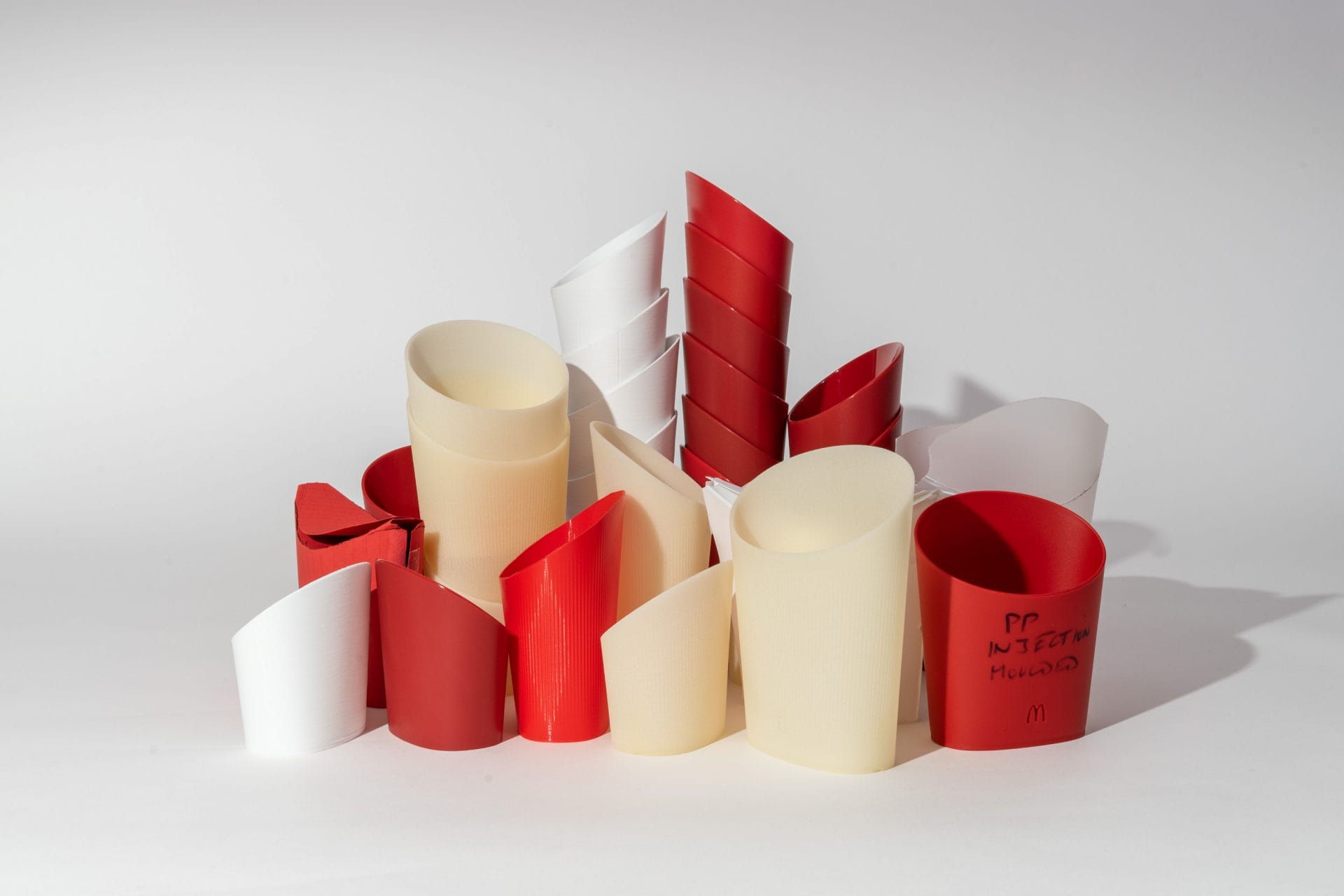
The French design studio Elium spent two years working on a solution for the American fast food giant McDonald’s that met the criteria, matched the brand and also looked aesthetically pleasing. A plastic resin was used that is similar in hardness and transparency to glass and ceramic, and special attention was paid to ensuring that the design works well in the context. For example, the surface of the lenses was given a ribbed pattern to prevent slipping, even with greasy fingers.
However, the changeover has not only been met with enthusiasm:
In addition to developing new packaging solutions, the company has also had to invest in new infrastructure such as high-speed dishwashers and hire additional employees in order to continue to guarantee a fast service. Customers are also expected to do more, as all packaging must be emptied clean when it is returned. So far, the company reports that over 92% of packaging has been returned, which could be reused an average of 29 times. This is a good example of how the infrastructure for reusable packaging can be created if the pressure is great enough.