SERVED
Two opposing yet simultaneously growing trends are currently shaping German food culture: on the one hand, a longing for the familiar and the traditional; on the other, a new understanding of healthy eating is taking shape. We’ve put together a selection for you .
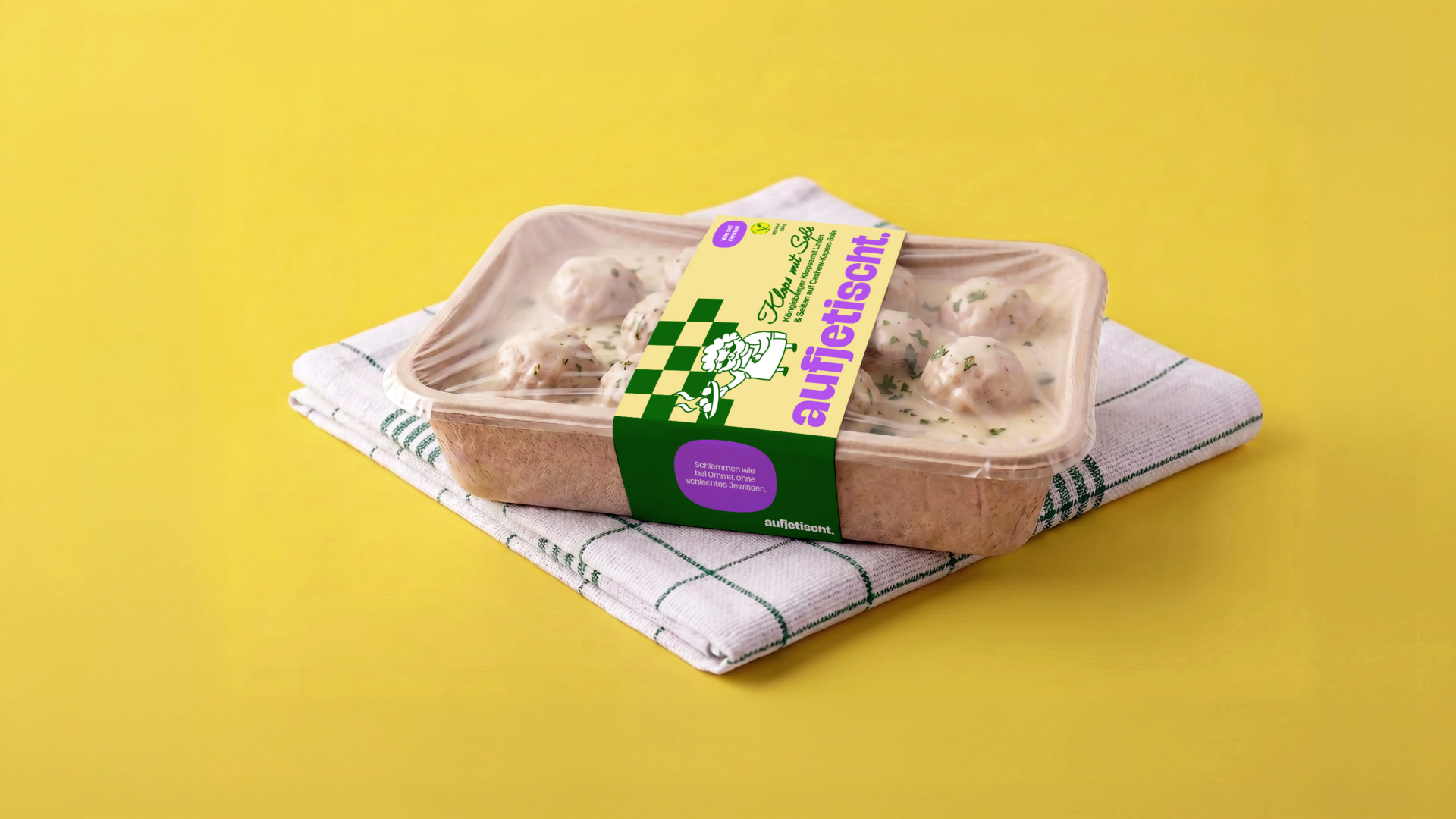
Classics—reimagined.
What food trend analysts refer to as “Newstalgia” is the desire for comfort in the form of home-style dishes, like the ones Grandma used to make. At the same time, meat-free alternatives have become so established that, according to the KPMG Consumer Barometer 2026, they account for 29.6% of all German shopping baskets. The 2025 Nutrition Report from the Federal Ministry (BMLEH) confirms the trend: 37% of Germans now describe themselves as flexitarians. They are consciously reducing their meat consumption but are not giving it up entirely.
The way people in Germany live together, cook, and eat has also changed fundamentally. While in 1950 just under one-fifth of all households were occupied by single people, the “single culture” now accounts for over 40% of households. The traditional extended family has given way to a society of soloists—with noticeable consequences for everyday culture: People who live alone rarely feel like spending hours at the stove cooking just for themselves, rolling meatloaf, or marinating a Sauerbraten for days on end. Traditional home-cooked meals were historically designed for large gatherings, not for a single person’s dinner after work.

The Concept.
Aufjetisch finds its place at the intersection of these various developments. In our “Future Products” series, we explore concepts that challenge and rethink existing routines. A “Future Product” doesn’t have to be flashy or disruptive. Sometimes, a small shift in the system is enough. This concept is one possible answer to a very real problem: the desire for familiarity and authentic flavor in the everyday life of modern singles. It takes classic dishes from German cuisine and rebuilds them from the ground up using plant-based ingredients—not as a simplified substitute, but with the same artisanal care as the original. The ingredients are marinated, braised, stuffed, and reduced. You can eat alone on the couch while watching your favorite show, or in a group during a spontaneous get-together.
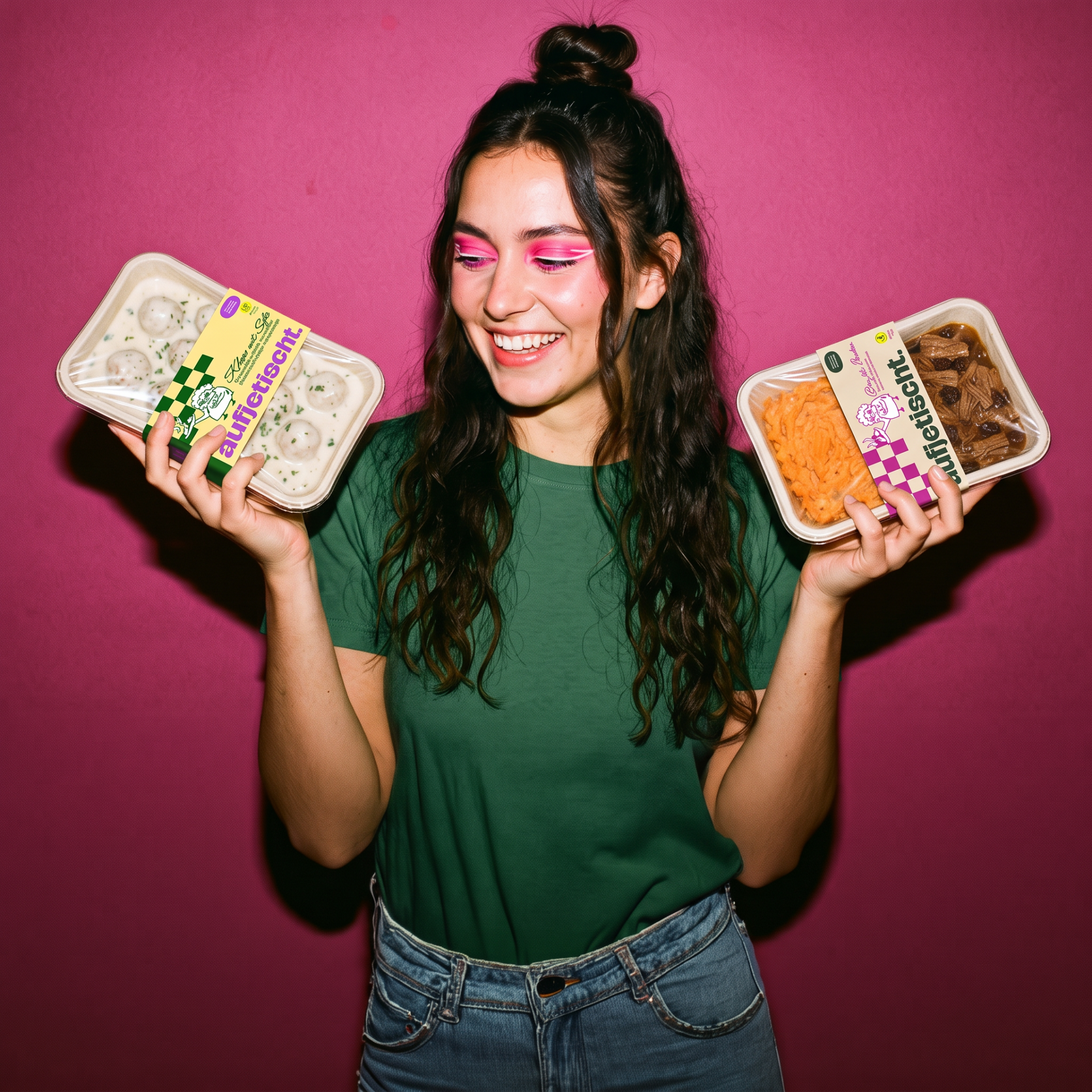
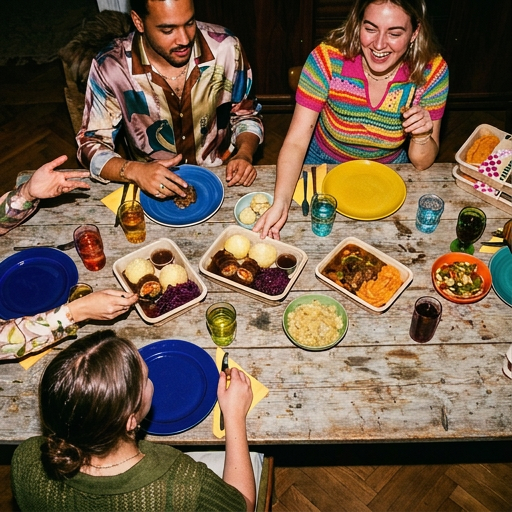
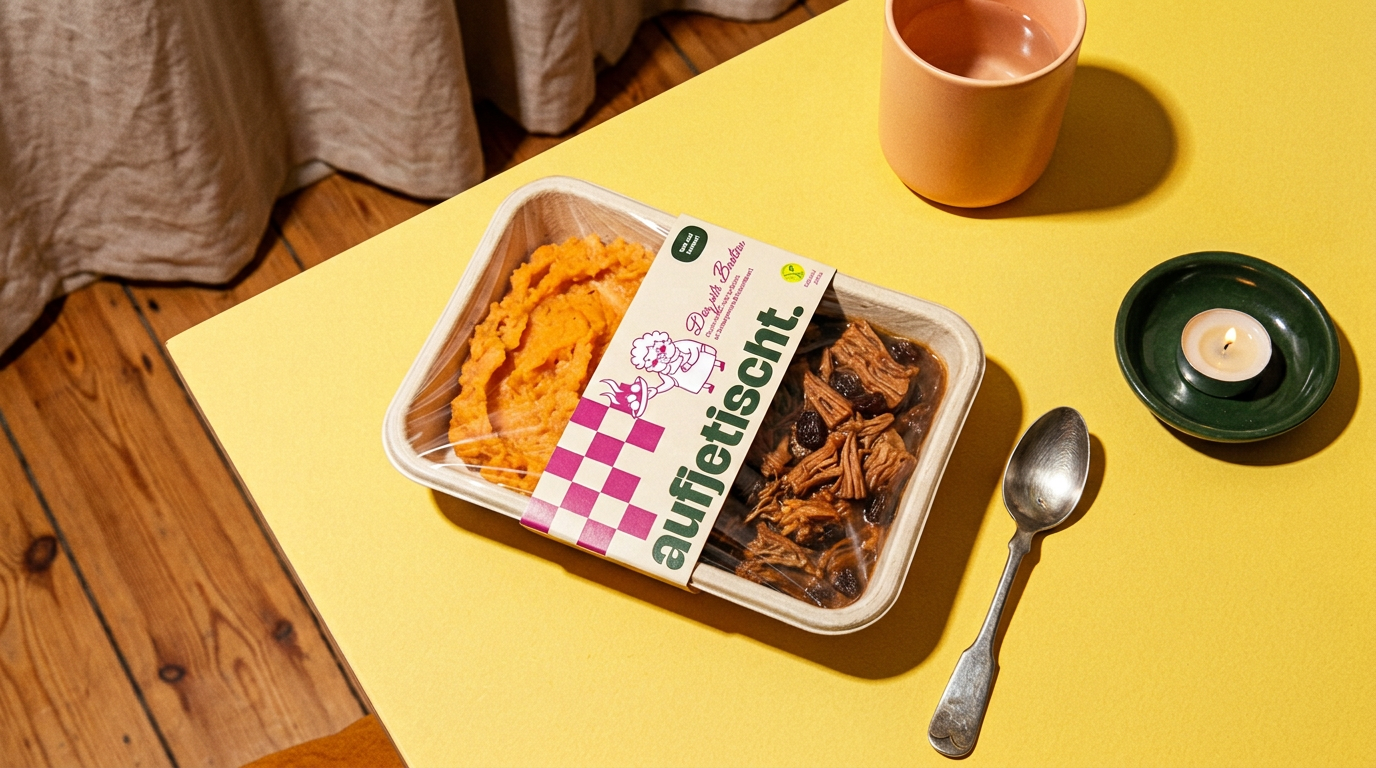
The Recipes.
The three starter dishes cater to typical cravings:
Meatballs: Königsberger-style meatballs made with lentils and seitan, rounded out with roasted onions, mustard, and nutritional yeast for a rich umami flavor. The creamy sauce is made with cashew cream, enhanced with lemon, bay leaf, and plenty of capers.
Sauerbraten: Tender jackfruit, braised overnight in a classic red wine and apple cider vinegar marinade, whose fibrous texture comes remarkably close to that of traditional braised meat. Served with button mushrooms, a hint of beetroot greens, and, as a modern contrast, creamy orange sweet potato mash.
Rolls: Gently seared eggplant slices envelop a hearty filling of smoked tofu, red lentils, carrots, and tahini. Braised in a dark vegetable stock and red wine, traditionally served with red cabbage and potato dumplings.

The packaging.
Instead of traditional plastic trays, aufjetischt uses molded cellulose fibers (molded fiber). The material is suitable for freezing, can withstand the heat of an oven or microwave, and can be disposed of in the paper recycling after eating. The tray itself serves as attractive tableware—no need to transfer food to another dish, and no extra dishes to wash.
The tray is sealed with a mono-PP film and wrapped in a paper sleeve. Because it consists of a single material (mono-materials instead of composite materials that are difficult to separate), the packaging seamlessly complies with the requirements of the European Packaging Waste Regulation (PPWR). The design is precisely tailored to the realities of young urban households: The slim format fits perfectly into the door compartment of standard freezers, and a practical corner makes it easy to tear open the film before heating.
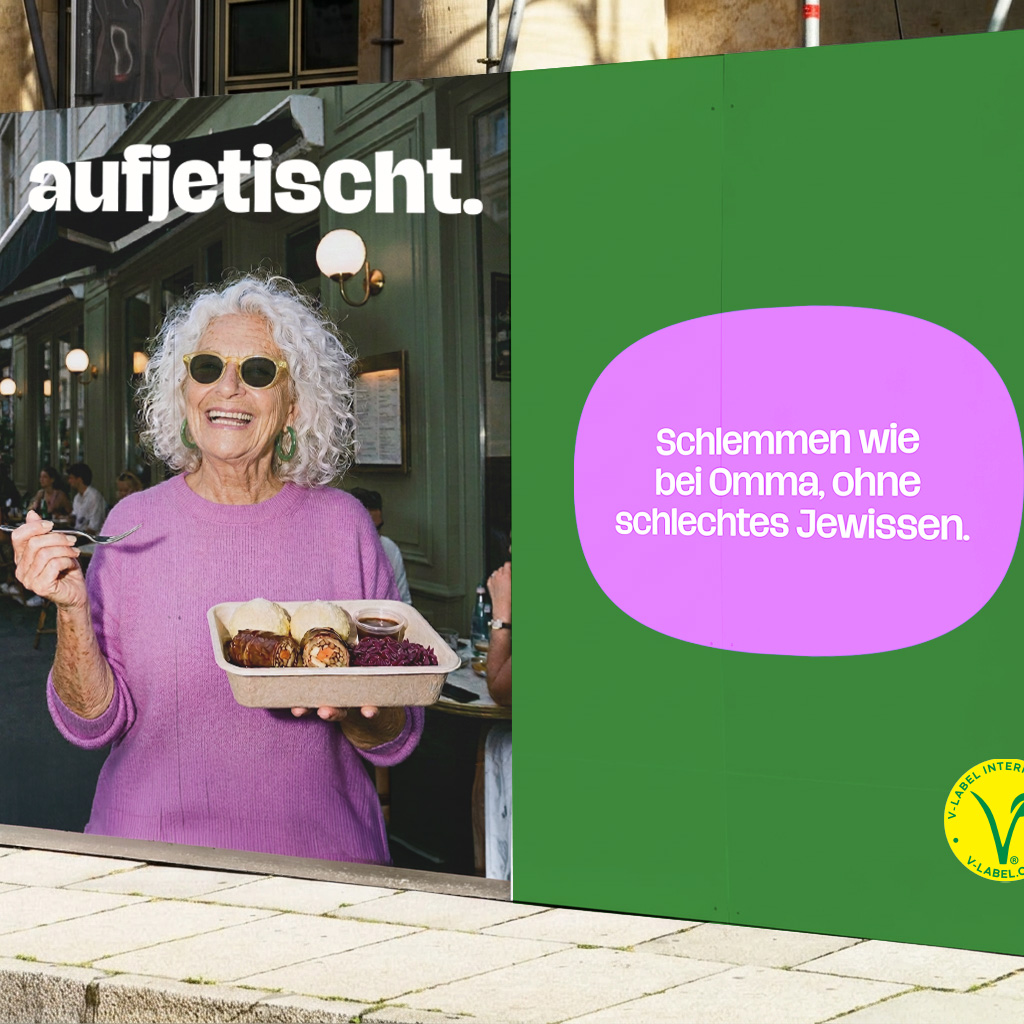
As a “Future Product,” aufjetischt demonstrates how it’s possible to address several contemporary trends at once: the changing nature of our household structures, the desire for coziness, and the rise of plant-based diets. Not through sacrifice or overcomplication, but through a good gut feeling. A familiar, warm moment—and then it’s back to business.