A city without waste.
The Italian town of Capannori, near Lucca, has a population of just 50,000, yet it has achieved something that many large cities can only dream of.
After efforts to prevent the construction of a waste-to-energy plant in 2007, the citizens decided to become Europe’s first “Zero Waste City.” To that end, a whole series of measures was introduced: for example, door-to-door collection, educational workshops, and a reuse center for used items.
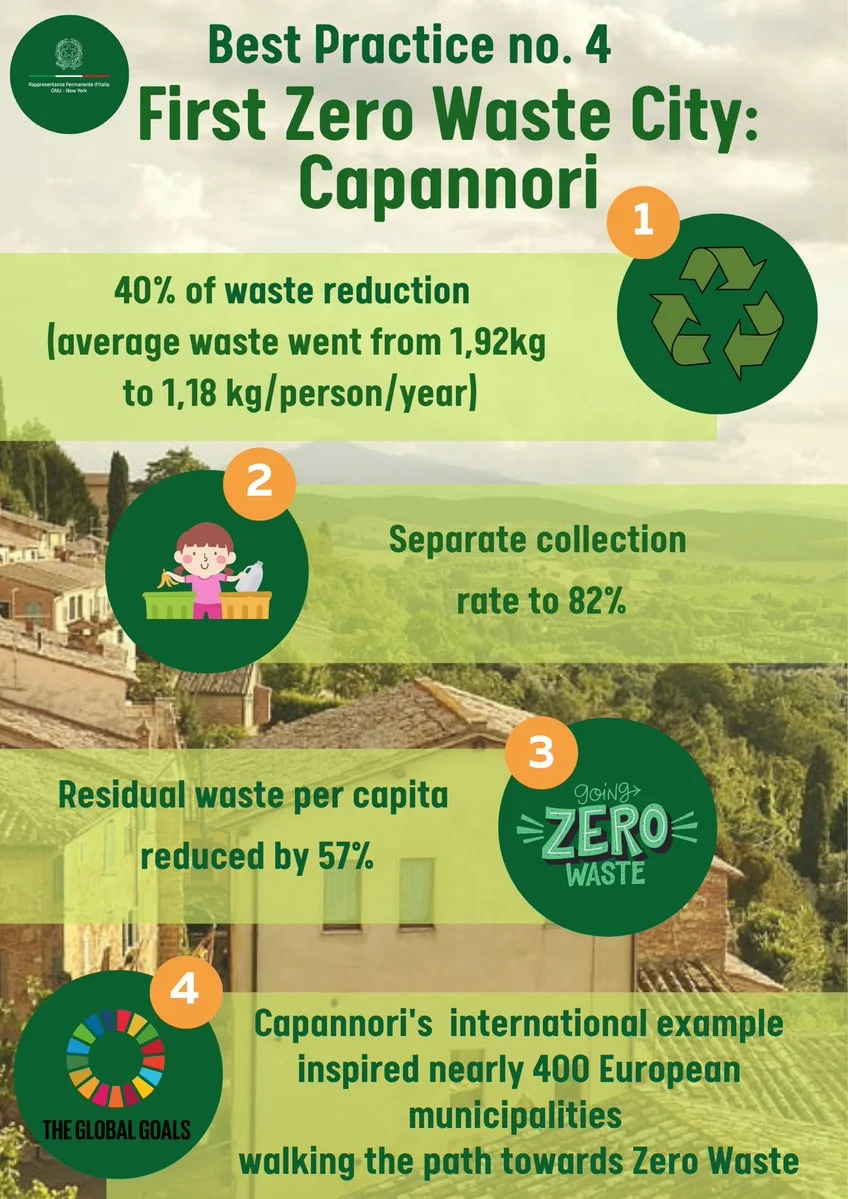
However, the most important measure was likely the introduction of the “pay-as-you-throw” system: Under this system, a household’s waste fee is calculated directly based on the actual amount of waste it produces. The results of this model are impressive—since its introduction, the city’s total waste volume has been reduced by 40%, while individual waste fees for residents have fallen by over 20%.
Hundreds of municipalities across Europe are now following Capannori’s example. Kiel became the first German city to adopt a comprehensive zero-waste plan (with the goal of reducing per capita waste by 15%) and was recognized as Germany’s first “Zero Waste Certified City.” Munich, too, has officially set out on the path to becoming a zero-waste city and is testing, among other things, optimized pickup and drop-off systems for recyclables. However, it’s important to note that the term “Zero Waste City” can be somewhat misleading: While the pure zero-waste principle theoretically aims for the complete avoidance of waste, in practice, cities follow the classic waste hierarchy and rely heavily on recycling, reuse, and improved waste separation.
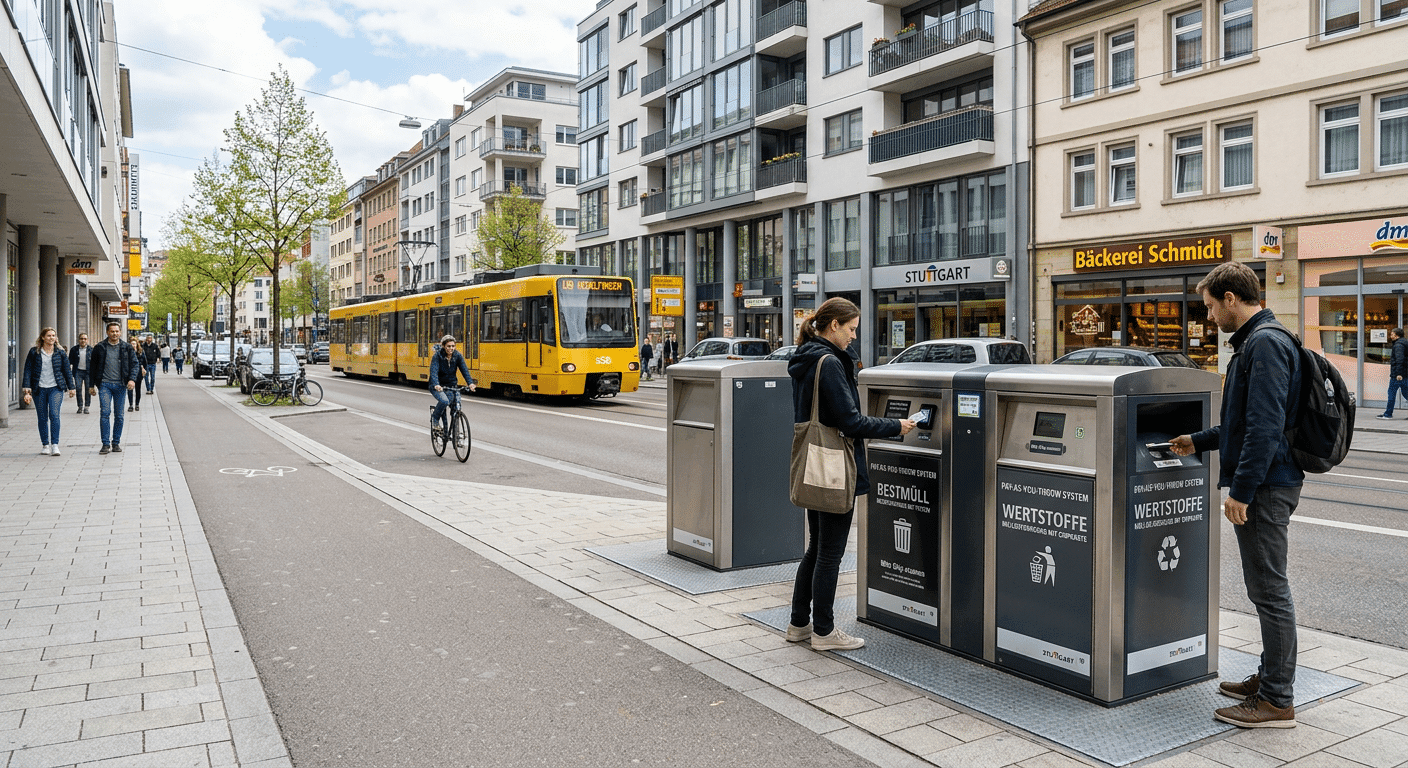
In a scenario where the “pay-as-you-throw” principle were implemented nationwide, the German waste management system would undergo a fundamental shift from a system focused solely on disposal to a transparent “polluter-pays” economy. Through the use of chip-equipped trash cans and smart containers that bill based on exact weight or emptying frequency, waste would acquire immediate financial value: Households that consistently reduce and sort their waste would be directly rewarded with noticeably lower fees. This financial incentive would, in turn, trigger a shift in consumer behavior—hard-to-recycle single-use packaging would be left on supermarket shelves, while unpackaged alternatives and standardized reusable systems would become the new everyday staples. Municipalities could reduce their residual waste volumes by up to half, schedule garbage trucks according to demand using digital fill-level sensors, and expand existing recycling centers into regional repair and reuse centers. At the same time, however, such a system would require clear social safety nets—for example, for families with young children or people in need of care—as well as strict controls against illegal dumping, to ensure that the principle of personal responsibility does not backfire.