The triumph of fibers continues: the paper bottle.
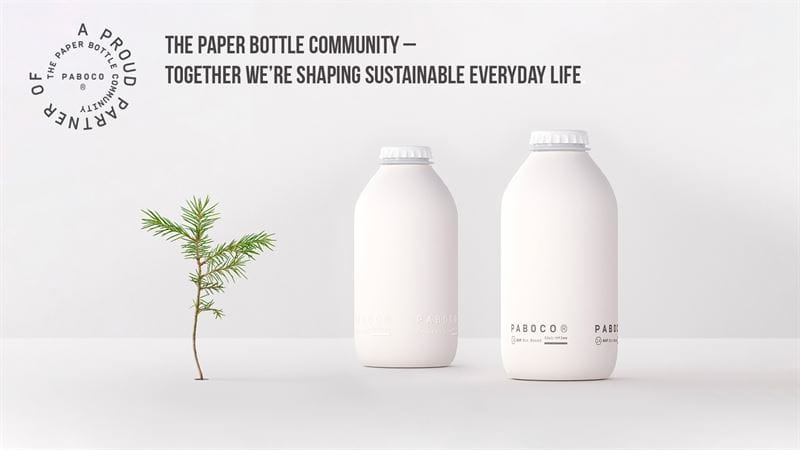
The “Paper Bottle” beverage bottle from the Danish manufacturer Paboco (now majority-owned by the ALPLA Group) is made from sustainably sourced wood fibers. A thin inner barrier protects the material from liquids, water vapor, and oxygen. While PET or PE liners were still used in the early stages of development, the transition to production-ready, extremely lightweight solutions marked the breakthrough: In combination with fiber-based closures (such as those from Blue Ocean Closures), the entire package now weighs less than 16 grams. Thanks to the minimal plastic content (less than 2 grams), the bottles can be easily recycled through the regular paper recycling stream.
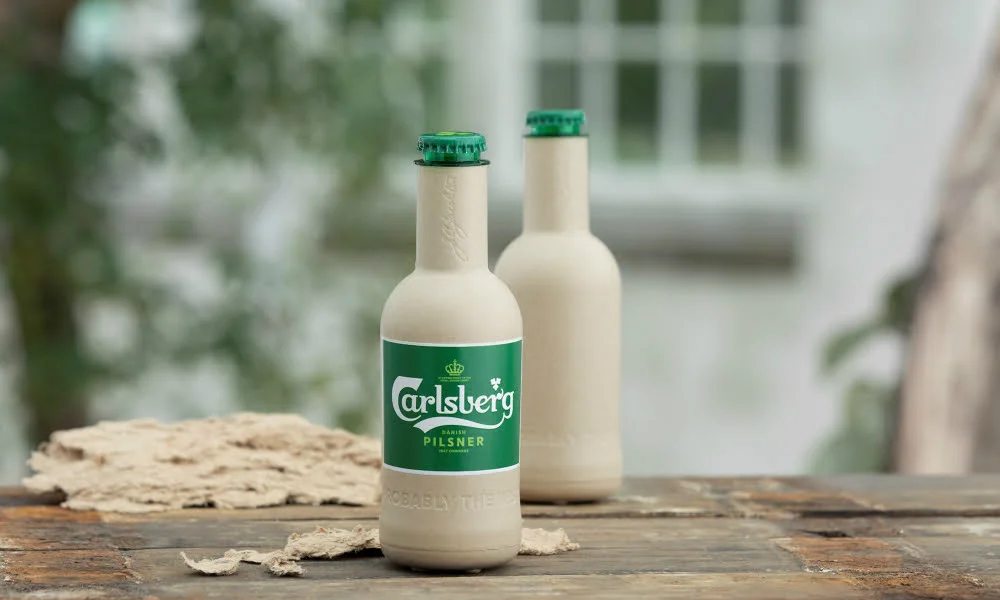
The Carlsberg Group has been steadily advancing its series of tests on the Fibre Bottle. Initial market tests in eight European countries showed that the wood fiber structure not only offers a completely new tactile experience but, when combined with innovative plant-based polymers (such as PEF), preserves the beer’s freshness and carbonation just as effectively as conventional PET. So far, Carlsberg has primarily used the bottles for pilot tests and events.
Companies to watch:
The British specialist Frugalpac also demonstrates that paper bottles have made the transition from niche experiments to mass marketing with its Frugal Bottle. Made from 94% recycled cardboard, this wine and spirits bottle weighs just 83 grams—five times less than a standard glass bottle—and reduces the carbon footprint by up to 84%. However, the multilayer inlay that protects the bottle from moisture remains a point of criticism. It is not recyclable and is more reminiscent of the classic “bag-in-box” design found in the budget wine segment.
Consumer acceptance therefore remains divided: While consumers appreciate the lightweight design and shatter resistance during outdoor activities or at festivals, in the premium segment—such as with higher-priced wines or spirits—many buyers still associate paper packaging with lower quality. Paper bottles also cannot yet compete on a widespread basis with established glass or aluminum lines in terms of filling speeds and shelf life. For the time being, they therefore remain a sustainable complement for specific niche markets—and it will be interesting to see how they develop further.