Digital watermarks for effective recycling of plastic packaging.
We’ve been closely following this trend ever since the early days of digital watermarking for smart packaging. We were involved in the early implementations at the NETTO discount chain using Digimarc and managed various design projects. However, the full potential of the idea is only realized within a network—across the entire value chain. With the “HolyGrail 2.0” project and the seamless transition to its successor initiative, HolyGrail 2030, a technology has reached production-ready status that could make a decisive contribution to the circular economy.
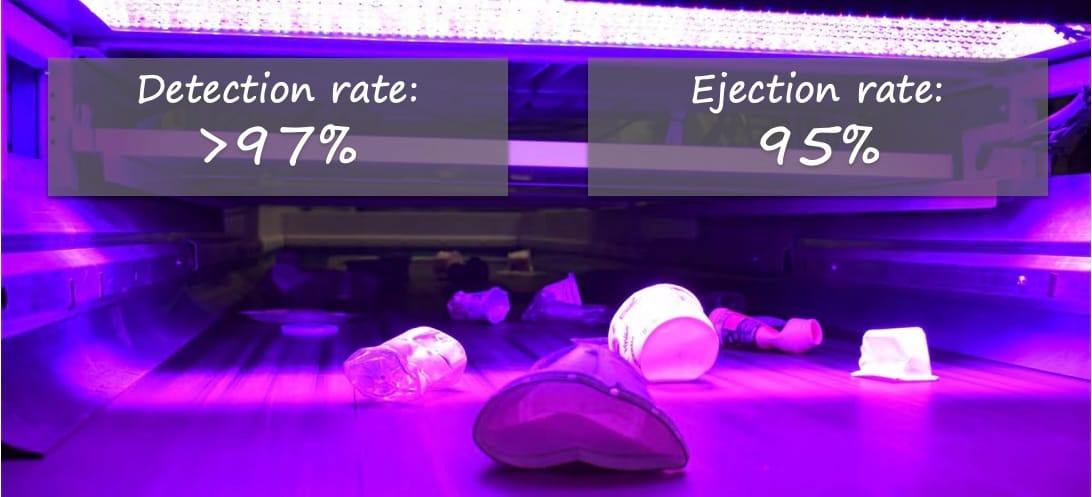
The Digital Watermarking Initiative, which is spearheaded by the AIM – European Brands Association and supported by the Alliance to End Plastic Waste—has demonstrated, with the completion of HolyGrail 2.0, the technical feasibility and economic viability of digital watermarks for the accurate sorting of packaging waste on a large scale.
Digital watermarks are imperceptible codes, about the size of a postage stamp, that cover the surface of consumer product packaging and contain a variety of attributes. As soon as the packaging enters a waste sorting facility, the digital watermark is detected and decoded by a high-resolution camera at the sorting facility. The system is then able to sort the packaging into the appropriate streams based on the transmitted characteristics (e.g., food vs. non-food). This results in more accurate sorting streams and, consequently, higher-quality recyclables, which benefit the entire value chain.
Now that the R&D phase was completed in 2024 with extensive industrial field tests, the final results are in: In practical trials under real-world waste conditions, the systems achieved a detection rate of over 90% and reached a technology readiness level of 9 (TRL 9). With the launch of HolyGrail 2030, the focus is now on widespread commercial implementation in the waste management industry to meet the EU targets for recycled content (PPWR) by the deadline.
Following the successful completion of the development and testing phase of HolyGrail 2.0, the follow-up initiative, HolyGrail 2030 – Circular Packaging, is focusing on large-scale commercial market launch and economic scalability. At the heart of the two-year market demonstrations are targeted pilot projects (including in Germany and Belgium) which are intensively dedicated to the circular economy of polypropylene (PP)—such as the clean separation of food and non-food packaging to recover high-quality, food-grade recyclates. In addition, the technology serves as a data foundation for the EU’s future Digital Product Passport (DPP): The SKU data captured via watermarks provides precise insights into material flows, sorting efficiency, and extended producer responsibility (EPR). In this way, HolyGrail 2030 provides concrete support to brand manufacturers and waste management companies in meeting the strict recycled content and recycling rates set by the new EU Packaging Waste Regulation (PPWR) by 2030.