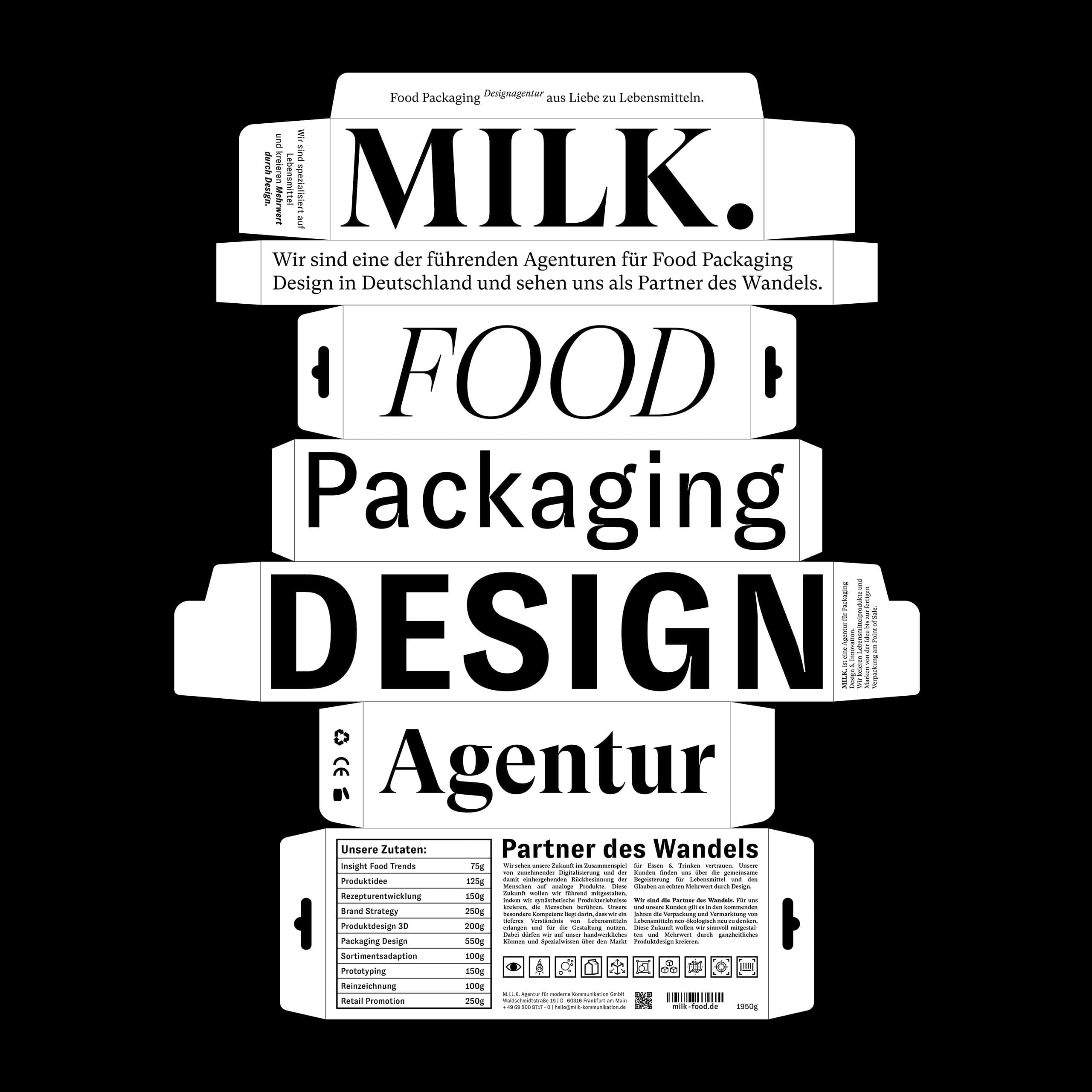
Food Packaging Design
Significance, legal requirements & best practices
What is food packaging design?
Food packaging design refers to the holistic design of food packaging – visually, functionally and strategically. It encompasses all design decisions relating to colors, typography, imagery, shapes, materials and information hierarchies with the aim of presenting products in a way that is strong-selling, brand-compliant and easy to understand.
In the food sector, packaging design is one of the most important brand touchpoints of all. Packaging must attract attention on the shelf, provide orientation, create trust and at the same time fulfill legal requirements. Good food packaging design therefore combines brand strategy, consumer understanding and technical feasibility.
For food brands, packaging design is not just a “shell”, but a key communication tool that can determine the success or failure of a product.
Why food packaging design is so important for food brands
Purchase decisions in food retail are often made spontaneously. It takes just a few seconds to decide whether a product is perceived, understood and purchased. Food packaging design plays a key role in this.
The most important advantages:
- Strong shelf impact: eye-catching design increases visibility
- Quick orientation: clear information hierarchy facilitates selection
- Brand recognition: Consistent design strengthens the brand
- Building trust: High-quality design signals quality
Especially for new product launches, relaunches or product range expansions, a strategically developed packaging design is crucial in order to stand out from the competition.
Best practices for packaging & brand strategy
Deriving design from the brand strategy
Successful food packaging design is based on clear brand positioning. Values, tonality and target group determine how colors, typography and imagery are used. This results in packaging that not only looks good, but is also brand-typical and credible.
This is where brand strategy, packaging design and product communication come together.
Combining function, regulation and aesthetics
In addition to its appearance, packaging must be functional and correctly display all mandatory information. A well thought-out information architecture ensures that the brand, product name, value proposition and legal information are clearly structured and easy to read.
You can find inspiration for effective food packaging design in the MILK. cases: