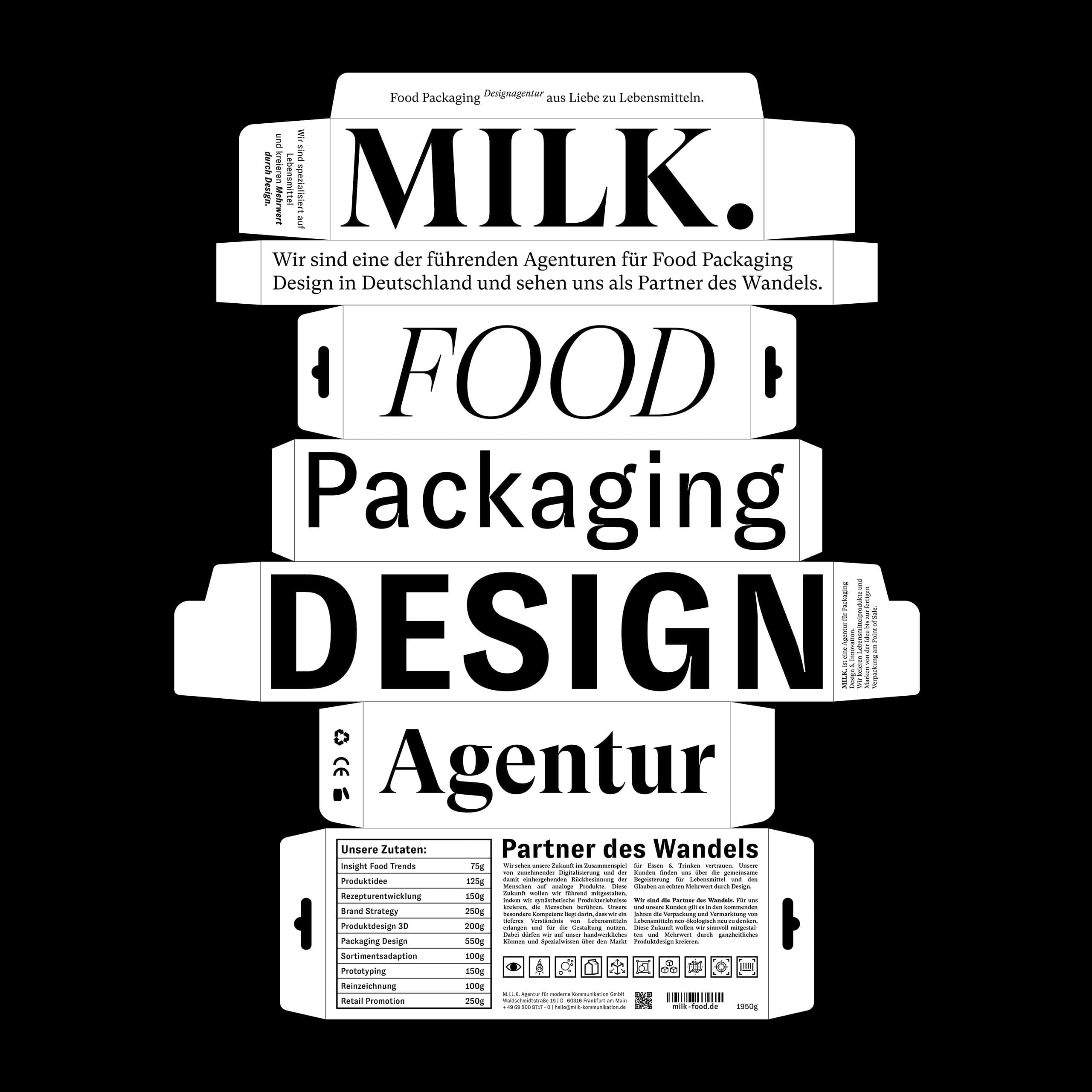
Packaging design
Meaning
What is packaging design?
Packaging design encompasses the visual and functional design of packaging. It combines brand strategy, design and technical requirements to present products in the best possible way and at the same time fulfill their protective function.
In the food sector, packaging design is one of the most important factors for product success. It determines how a product is perceived on the shelf, what information is conveyed and whether consumers buy it.
Packaging design includes color schemes, typography, imagery, choice of materials, shape and information structure.
Why packaging design is so relevant for food brands
Packaging design is often the first point of contact between brand and consumer. Within a few seconds, it must attract attention, build trust and clearly communicate the product benefits.
The most important advantages:
- High shelf impact: products stand out on the shelf
- Brand differentiation: Clear differentiation from the competition
- Orientation: Quick comprehensibility for consumers
- Brand building: Consistent visual identity
A strong packaging design combines emotion and function – and thus becomes the decisive buying impulse.
Best practices for packaging & brand strategy
Developing design strategically
Packaging design should always be based on a clear brand strategy. Target groups, positioning and competition must be taken into account in order to develop a differentiating design.
This is where brand strategy, packaging design and consumer Insights come together.
Combining function and design
In addition to the visual impact, aspects such as legibility, handling and choice of material must also be taken into account. Convincing packaging can only be created when design and function work together.
You can find inspiration for effective packaging designs in the MILK. cases: