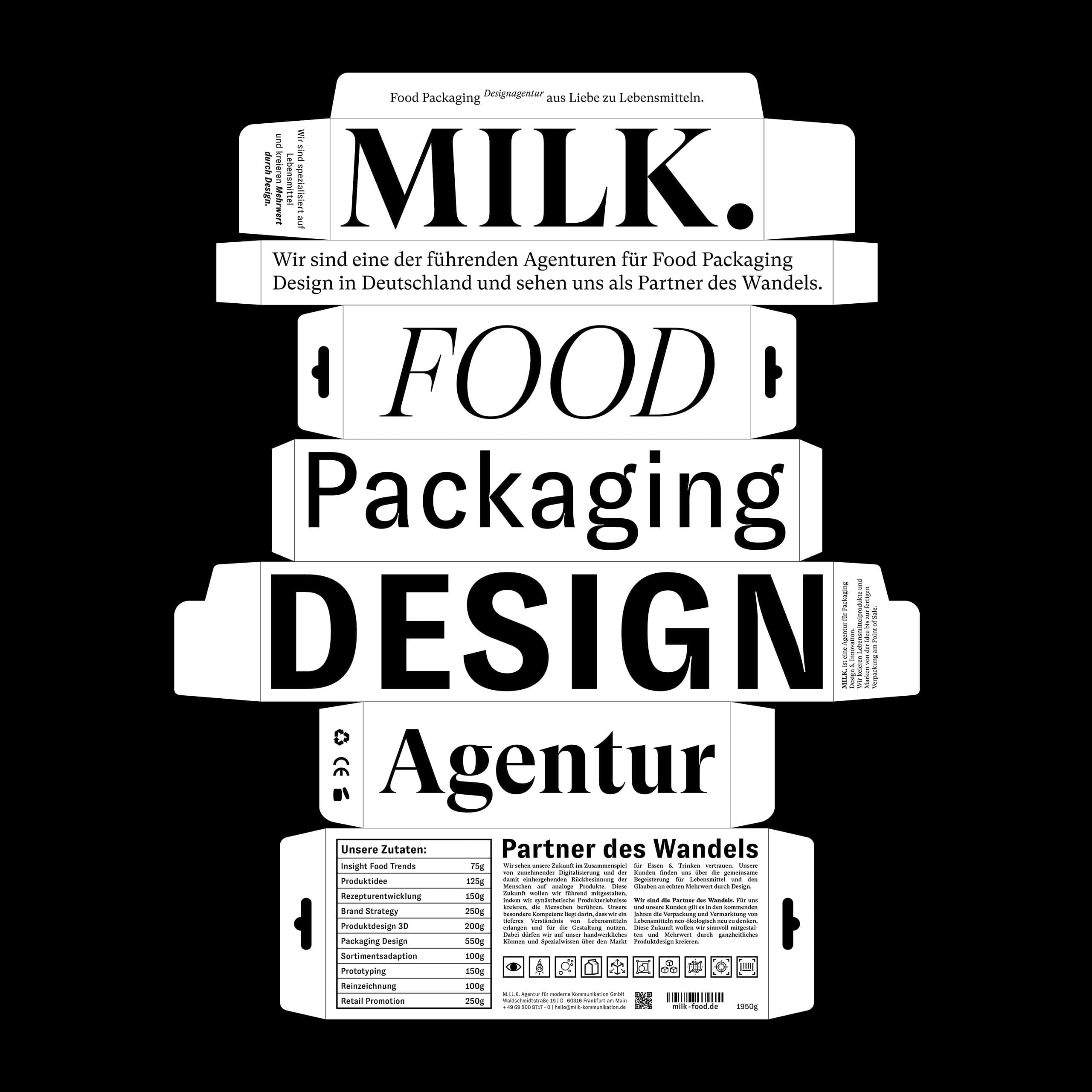
Secondary packaging
Meaning
What is secondary packaging?
Secondary packaging is the packaging level that combines several primary packaging units. It does not come into direct contact with the food, but is primarily used to bundle, protect and present products at retail.
Typical examples in the food sector are cardboard packaging for yoghurt multipacks, shrink film for drinks bottles or trays for canned food. Secondary packaging facilitates transportation, storage and shelf placement and is an important link between the product and the sales environment.
Why secondary packaging is relevant for food brands
Even if they are often less in the spotlight than primary packaging, secondary packaging has a major influence on efficiency and brand impact in retail.
The most important advantages:
- Optimized logistics: bundling facilitates transport and handling
- Additional product protection: protection against damage
- Improved shelf presentation: structured placement in stores
- Extended communication area: space for brand messages or promotions
Secondary packaging plays an important role in sales, especially for multipacks or promotional goods.
Best practices for packaging & brand strategy
Optimize functionality and efficiency
Secondary packaging should be tailored to logistics processes – for example in terms of stackability, stability and handling in retail. At the same time, it is important to keep an eye on the use of materials and sustainability.
This is where packaging development, material consulting and supply chain optimization come together.
Use secondary packaging as brand space
Especially with open trays or visible multipacks, secondary packaging can actively contribute to brand communication. Clear color schemes and concise messages attract additional attention at the POS.
You can find inspiration for well thought-out secondary packaging concepts in MILK.’s cases: