Does sustainable packaging exist?
Sonja Bähr – Senior Packaging Consultant – TILISCO GmbH, Packaging Management | Made for Recycling | Ecodesign | Optimization
Guest article: Sonja Bähr
They do not exist. They do exist. It all depends! It’s clear that this is not the answer you’re likely to get if you enter the term ‘sustainable packaging’ into your trusted search engine. But at least you can then choose from around 9.67 million results. When it comes to packaging food well, there is bound to be some suitable sustainable packaging.
Try and error is one way, the other starts with answering a few questions. Because packaging is complex. When making a selection, the following points must be considered as a minimum: the material, the product, the packaging process, the logistics, the brand, the consumer, the trade, the environment, disposal, …
The search for the right packaging, which should also be sustainable, is linked to various conditions.
First of all, we need to define what sustainability actually is. There is no official definition and everyone understands it a little differently. The big internet lexicon says the following: “Sustainability is a principle of action for the use of resources in which the long-term satisfaction of needs is to be ensured by preserving the natural regenerative capacity of the systems involved.” In other words: “Do not take more than you consume and ensure that supplies are available within a reasonable time and under reasonable conditions.” But we have not been doing this for a long time. The Earth Overshoot Day, i.e. the point at which more resources are consumed than are actually available, is getting closer every year. We live on credit, largely with an “ex and hop” mentality and pay too little attention to whether and how resources can be used again.
In terms of food packaging, this means that from a technical or professional point of view, as a designer, bottler or manufacturer, but above all as a consumer, you first have to ask: “Do I need this product?”.
So if consumption and consumption are necessary, you can immediately ask the next question: does the product have to be packaged at all? Following in the footsteps of organic food retailers and unpackaged food stores, conventional retailers are now also doing away with more and more packaging. Omitting is sustainable or can at least be sustainable, namely whenever the product does not suffer as a result and spoil or become inedible or unsaleable. In general, it can be said that more resources such as water, land and energy are used to produce food, even largely unprocessed products, than for the associated packaging. Exceptions prove the rule.
This means that the quality of the product is sustainable because it is bought and consumed and not incinerated as waste in the biogas plant. This is the most important function of packaging, regardless of the product: the protective function. This is the most basic task of packaging: to protect the product from external factors such as moisture, oxygen, light, bacteria, vermin, destruction, etc. But the environment may also need to be protected from the product, just think of odors, product components such as grease or harmful substances.
The product determines the packaging requirements. What is the product like, is it liquid or solid? Is it a fresh or long-life product? How long should the shelf life be? Is the product heavy or light? Is the product moist or dry? Is a cold chain required? Are there requirements for barriers that must protect the product from water vapor, oxygen or light? This series can be continued indefinitely and at some point the question of sustainability arises again.
There are two main directions that packaging can follow to become more sustainable: Maximizing recyclability or reducing the carbon footprint.
In some cases, these objectives contradict or pay into each other. And it’s not a local trend or a German idea, it’s about dealing with waste in the sea and on land as a global problem to be solved.
The United Nations was able to agree on 17 goals for sustainable development (UN Sustainable Development Goals (SDG)). However, the objectives do not provide any definitions or measurable values. Measures for more sustainable packaging solutions touch on at least four of the goals: ‘Zero hunger’ – ‘Responsible consumption and production’ – ‘Climate action’ and ‘Life below water’.
The more than 450 global brand companies from various sectors that have jointly signed the Ellen MacArthur Foundation’s agreements must comply with much more specific requirements.
Clear targets have been set since October 2018: Problematic or unnecessary plastic packaging is to be avoided. Reuse should be preferred over single-use. It must be ensured that 100% of plastic packaging can be easily and safely reused, recycled or composted by 2025. In addition, the amount of recycled plastic should be significantly increased and processed into more new packaging or products.
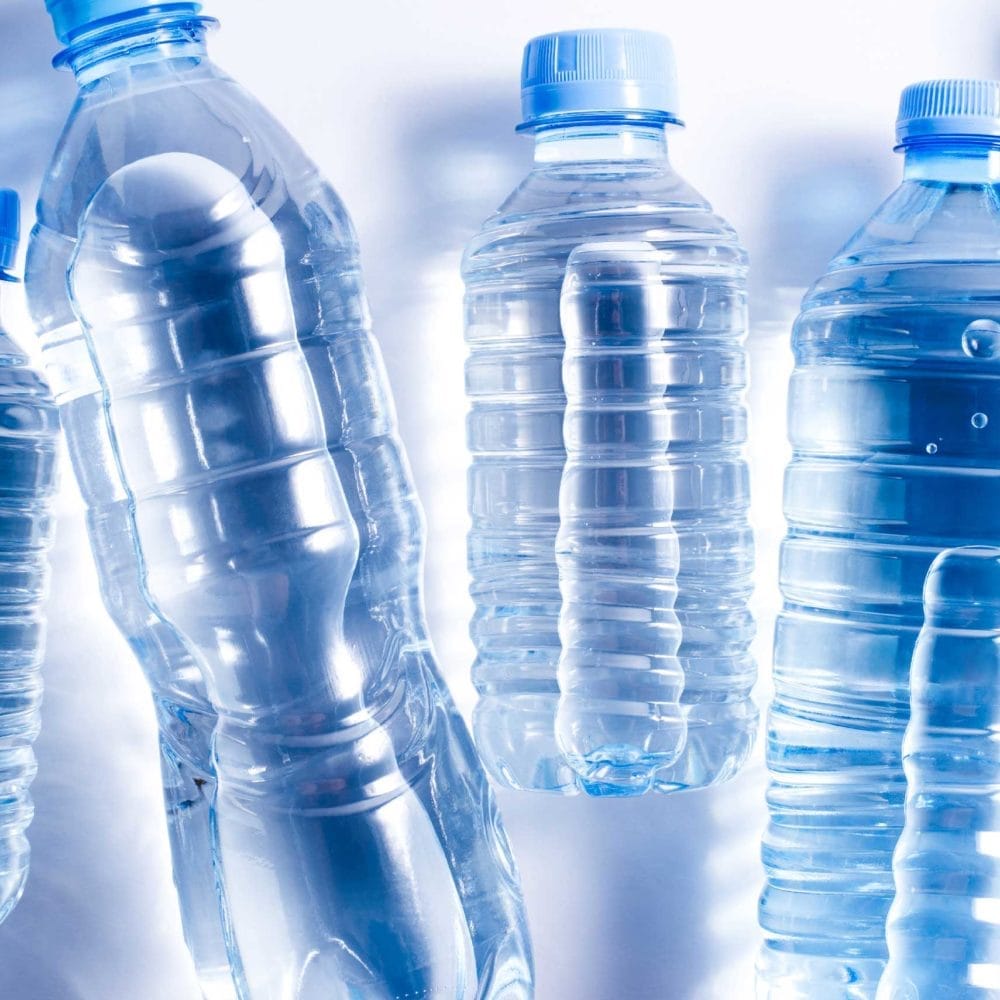
The EU’s Plastic Strategy takes up precisely these goals and makes them even more concrete. From July 2021, these requirements must be transposed into national law in the European countries: The ban on certain plastic products, such as disposable tableware, straws, balloon sticks and drinks cups, will then apply. From 2025, the collection target for the recycling of PET drinks bottles should be 77%, lids must then be permanently attached to the bottles and PET bottles must contain 25% recycled material. As part of extended producer responsibility, manufacturers of cigarettes, fishing nets and plastic bottles, for example, are to contribute to the costs of cleaning beaches. By 2030, all plastic packaging in the EU should be recyclable or reusable. The focus is on a definition of recycling-friendly design.
Germany is already implementing some of the EU requirements in the German Packaging Act (VerpackG). Section 4 describes the requirements for packaging as follows: Avoid, reduce, recycle high-quality materials, promote the use of recyclates.

These goals require concrete implementation in packaging:
Maximize recyclability, for example by using more mono-material, create recyclable composites, pay attention to separable components, transparent plastic containers are much more suitable for recycling.
Reduction of the CO2 footprint, for example through the use of fewer materials and resources, use of materials made from renewable raw materials that can also be reused in the cycle. The use of recycled materials also reduces the CO2 footprint, as does very good recyclability.
Many major branded goods companies and retailers are already announcing corresponding targets. Current research and development projects are working on new materials that are increasingly recyclable and on packaging that is produced from renewable raw materials, ideally from materials that would otherwise be production waste.
The search for sustainable packaging is always a case-by-case approach. It may not be possible to meet all requirements, in which case priorities must be set and the next best alternative is used.
But there are good and sustainable solutions, genuine innovations and promising concepts. Everyone who is involved with packaging should please continue to research, remain curious, creative and critical.