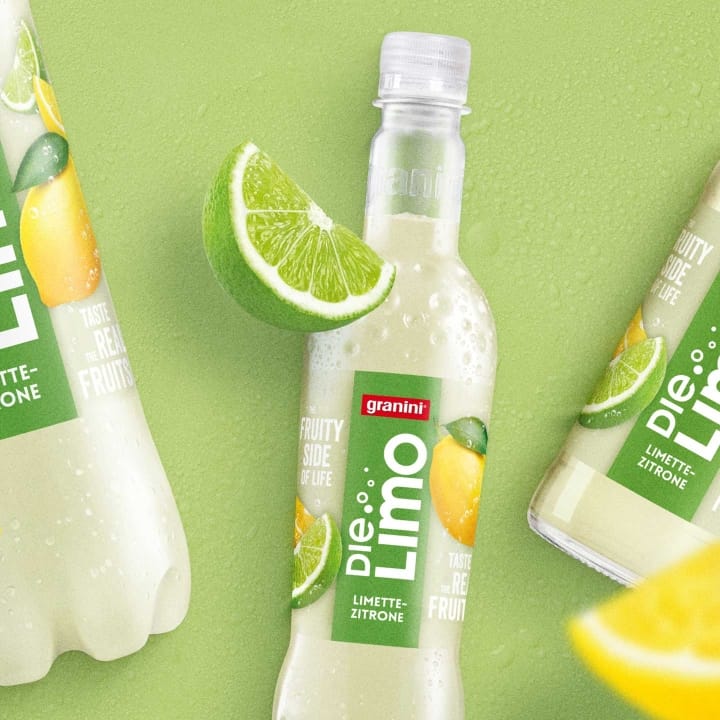
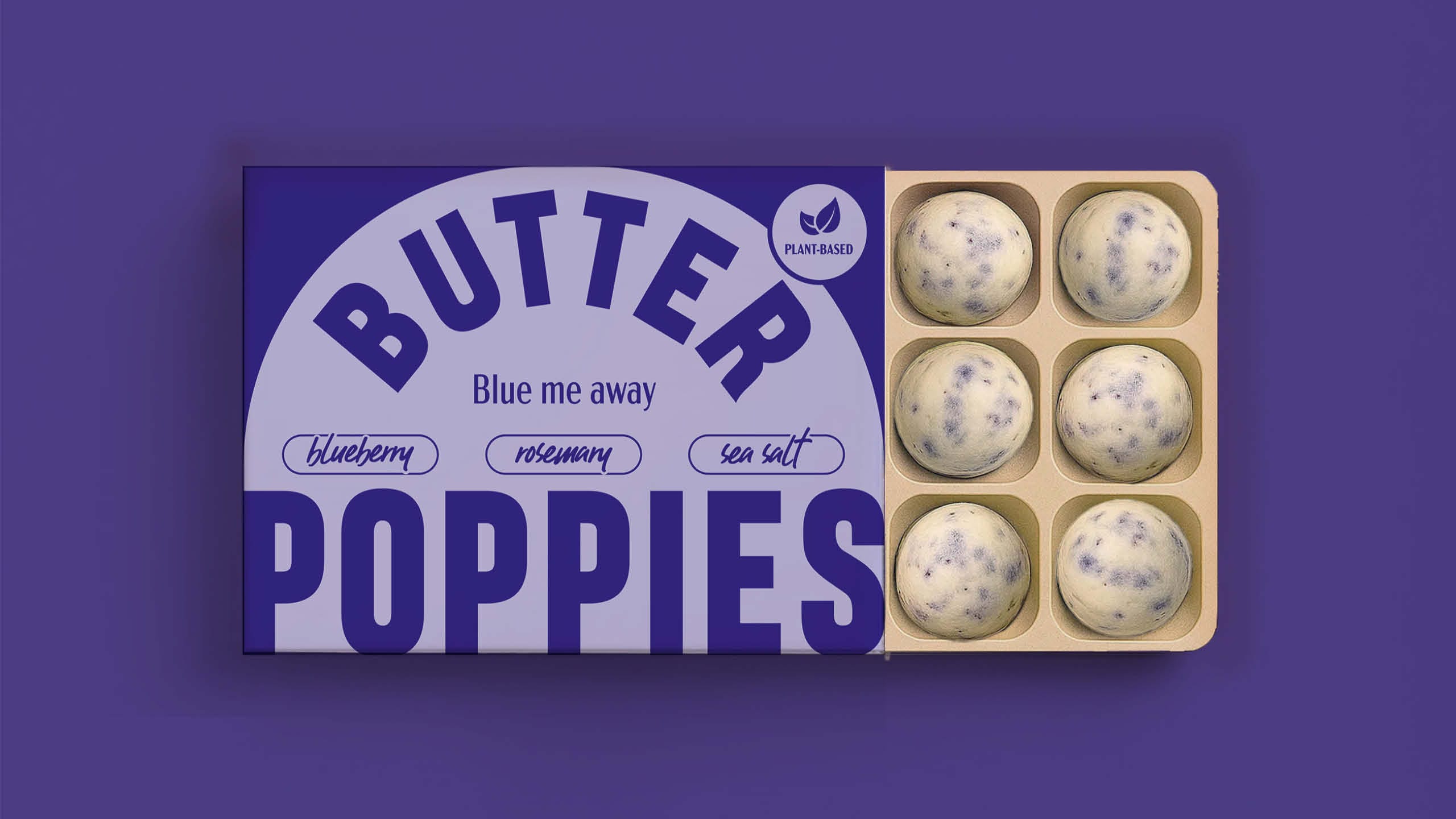
Our sweet spot: food expertise & design know-how.
Our USP is the combination of food expertise, design know-how and technical implementation strength.
While many agencies work across all sectors, we have deliberately specialized in the food and packaging world. This allows us to deliver not just beautiful design, but designs that sell – optimized for the POS, for regulatory requirements and for sustainable future solutions.
With us you get:
- Industry knowledge: immediate added value, no lengthy familiarization required
- Shelf impact analyses: so that your product stands out on the shelf
- Innovative tools: 3D renderings & AI-supported tests to obtain early feedback
- Sustainability expertise: so that your brand is future-proof
- A team that loves food: we think like consumers, producers and designers at the same time
Our uniqueness lies in our 100% specialization in food & packaging.
We understand the psychological triggers when shopping for food and know what role haptics, materials and colors play on the shelf.
We also know the legal requirements such as LMIV or nutritional value labelling and ensure that packaging is not only appealing but also legally compliant.
We translate trends such as plant-based, clean label or convenience into sales-boosting designs.
This consistent focus makes us strategic partners who differentiate brands and create a real competitive advantage.
We believe that brands today have to do more than just look good.
Change is not optional – it is the only constant. Markets are changing, consumers are becoming more aware, packaging must become more sustainable, communication faster and more digital.
As a partner of change, we at MILK. help our customers not only to master these challenges, but to use them as opportunities.
Living sustainability: We develop solutions that conserve resources and take responsibility – not just for the shelf, but for the planet.
Promoting innovation: With 3D and AI tools, prototyping and agile processes, we accelerate the path from idea to market.
Building bold brands: We create designs that show attitude, arouse emotions and stand out from the competition.
Shaping the future: We don’t just think about the launch, but about the entire life cycle of the brand.
For us, change is not the problem – it’s the driver. With MILK., change becomes a strategic advantage.
Because change is the new normal. Consumers are paying more attention to sustainability, brands have to constantly reinvent themselves and innovation is the difference between success and failure.
With MILK. you have a partner who:
- Anticipating changes instead of running after them
- Sustainable solutions developed to ensure future viability
- Combining creativity and strategy to not only keep up, but to set trends
- Encourages you to break new ground
This turns change from a challenge into an opportunity that makes you stronger, more relevant and fit for the future.
At MILK. we combine our comprehensive expertise in food & beverage with creative excellence and technical know-how – all from a single source. We support brands and products from the initial idea through brand strategy and packaging design to the final pre-press stage and market launch.
We specialize in the food industry. This focus means that we not only understand design, but also category logic, consumers and sales contexts – this ensures that our packaging is both emotionally convincing and economically effective.
For us, sustainability is not an add-on, but part of the core process. We offer sustainable packaging advice and consider material selection, recyclability and environmental compatibility right from the start.
With our in-house Innovation Lab, combined with 3D and AI visualizations, we enable fast prototypes, early testing and optimized shelf impact analyses – saving our customers time and money.
Whether you are a start-up, a medium-sized company or an established brand – we can take on a modular approach: from a redesign to individual packaging lines to complete brand relaunches including corporate design, packaging, language world and launch support.
In short, we combine brand understanding, F&B industry expertise, creative design and sustainable, technical implementation to create an overall concept. This is how we create packaging that not only looks good, but also works on the shelf, convinces consumers and is sustainable.
We support food start-ups from the idea to market entry – strategically, creatively and practically.
Brand strategy
-
We define positioning, brand promise and target groups clearly and consistently.
-
Development of name, logo, color and typography systems that convey the identity and story of the brand.
Packaging & Design
-
Development of eye-catching packaging that is convincing on the shelf and at the same time sustainable and practicable.
-
Quick prototypes and digital shelf tests to test impact and orientation in advance.
Market entry & launch
-
Advice on product range development, POS strategy and communication.
-
Support with cooperations, retail partners and distribution to make the launch efficient and successful.
In this way, we ensure that start-ups not only have a strong concept, but also a brand that is visible, relevant and marketable.
We support international F&B brands in successfully entering the DACH market – with a comprehensive approach comprising strategy, design and market knowledge.
Market analysis & positioning
-
Evaluation of trends, competition, consumer preferences and shelf conditions in Germany, Austria and Switzerland.
-
Adaptation of brand messages, claims and packaging to local expectations and legal requirements.
Packaging & Shelf-Impact
-
Development of designs that are visible and understandable in the DACH chiller cabinet, in the convenience sector or at the POS.
-
Use of 3D visualization and digital tests to test consumer impact and buying impulses at an early stage.
Launch & implementation
-
Support with trade partnerships, distribution and communication for an efficient market entry.
-
Advice on sustainability, materials and recyclability in accordance with DACH regulations.
In this way, we ensure that international brands quickly attract relevant attention, appear effective to consumers and survive in the DACH market in the long term.
Yes, we specifically support D2C food brands with e-commerce-compatible packaging.
Protection & functionality
-
Packaging is designed to ensure that products reach the customer undamaged, while taking materials and sustainability into account.
-
Optimization of size, stability and filling volume for shipping and storage.
Brand and shopping experience
-
Designs that stand out in the online store, convey the brand story and create a positive unboxing experience.
-
Integration of information, QR codes or digital touchpoints for interaction and transparency.
Efficiency & sustainability
-
Selection of recyclable materials and shipping optimization to reduce costs and environmental impact.
This is how we at MILK. Attention, functionality and sustainability so that D2C brands are convincing online and at the same time offer a consistent brand experience.
A successful brand strategy for F&B products combines brand identity, consumer understanding and market positioning:
Target group analysis & Insights
-
Understand who the consumers are, what their needs, wishes and buying motives are.
-
Analysis of trends, competition and consumer behavior in relevant channels.
Brand essence & positioning
-
Definition of the brand promise, the values and the unique value proposition.
-
Clear differentiation from the competition, e.g. taste, origin, sustainability or premium quality.
Communication strategy & storytelling
-
Consistent language, claims and imagery that convey brand value and product promise.
-
Consistent messages across packaging, online presence, POS and social media.
Packaging & Experience
-
Design that attracts attention, provides orientation and conveys the brand message emotionally.
-
Consideration of haptics, choice of materials and sustainability as part of the brand identity.
Continuous adaptation & monitoring
-
Analysis of sales figures, shopper feedback and market reactions in order to continuously optimize strategy.
This creates a brand that is clear, relevant and trustworthy, stands out on the shelf and retains buyers in the long term.
A successful rebranding must preserve familiarity and modernize at the same time:
Gradual change
-
Adapt core elements such as logo, colors or packaging shape only moderately to ensure recognition.
-
Introduce new design elements gradually instead of changing everything at once.
Communication & storytelling
-
Inform consumers at an early stage, e.g. via social media, POS material or PR.
-
Clearly communicate the reasons for the rebranding (quality improvement, sustainability, innovation).
Linking old and new
-
Show old and new packaging side by side or use “Updated Design” notices so that regular customers understand the transition.
Test & Validate
-
Use digital mockups, focus groups or shelf impact tests in advance to check acceptance and orientation.
Consistency across all channels
-
Design, claims and brand message must be consistent at all touchpoints in order to maintain trust.
In this way, rebranding succeeds without losing regular customers by preserving the familiar while conveying a fresh, contemporary brand image.
A clear brand architecture ensures that consumers quickly understand products and perceive the brand consistently:
Portfolio analysis & segmentation
-
Classify all products by category, target group, price level and usage scenario.
-
Create a clear hierarchy: Umbrella brand, sub-brands, product lines and variants.
Defined roles for each brand
-
Each brand or line should fulfill a clear purpose (premium, basic, innovation, limited editions).
-
Avoidance of overlaps to prevent cannibalization.
Visual & communicative consistency
-
Uniform typography, color schemes and imagery for each level.
-
Consistent claims and storytelling that convey hierarchy and positioning.
Flexibility for growth
-
Design the structure in such a way that new products or innovations can be easily integrated.
-
Clear rules for naming, packaging design and POS appearance.
Transparency for consumers
-
Products must be recognizable at a glance and make sense in the hierarchy.
-
Orientation aids such as color or shape coding support differentiation on the shelf.
This creates a clear, consistent brand architecture that makes portfolio complexity manageable and at the same time facilitates purchasing decisions.
At MILK., we develop a differentiating brand positioning that emphasizes the brand’s strengths while clearly addressing the competition:
Target group focus & Insights
-
Analysis of who the consumers are, which needs, lifestyles and usage occasions are relevant.
-
Identify differences in motivation, taste preferences and purchasing behavior compared to established brands.
Differentiating brand message
-
Highlighting unique characteristics: taste, ingredients, functionality, sustainability or lifestyle aspects.
-
Development of a clear claim and a story that conveys the added value compared to competitors.
Packaging & Shelf-Impact
-
Design that stands out on the shelf and is clearly differentiated from competitors without ignoring existing category visuals.
-
Color and design, typography and haptics are used in a targeted manner to increase recognition and attention.
Channel & communication strategy
-
Coordination with POS, social media, sampling or influencer activations to consistently convey the brand message.
-
Combination of emotional appeal and clear product benefits to convince buyers.
In this way, we create a positioning that is memorable, differentiated and in line with the market and enables the new RTD brand to be successfully perceived alongside strong competitors.
A clear hierarchy ensures that consumers recognize the brand, understand the product quickly and make purchasing decisions more easily:
Brand as an umbrella
-
The brand identity is always in the foreground: the logo, color scheme and typography convey the core values.
-
Consistent placement of the brand on all products creates recognition.
Variety as differentiator
-
Variety names (e.g. “vanilla”, “strawberry”) are clearly separated from the brand, e.g. through typography, color or placement.
-
The variety quickly conveys which product it is without weakening the brand.
Claims for additional benefits
-
Functional or emotional claims (e.g. “high protein”, “organic”) support the purchase decision.
-
Claims should be legible, understandable and positioned secondary to the brand so that they provide orientation but do not dominate the core brand.
Visual hierarchy & layout
-
Contrast, size, color and placement define which information is perceived first.
-
Uniform design across all products ensures clarity and consistency on the shelf.
The result is clear, comprehensible packaging that clearly communicates the brand, variety and additional benefits and offers shoppers orientation.