Market research for food brands & food products.
We create well-founded Insights for food brands – with focus groups, AI-based in-depth interviews, pack design testing and market-oriented research from the idea to the purchase decision.


Strategic, well-founded and future-oriented market research for food brands.
As a partner for market research in the food sector, we support companies in making well-founded decisions for brands, products, packaging and innovations. We combine qualitative and quantitative methods with modern, AI-based research approaches to visualize needs, motives, perceptions and purchase barriers in the food market.
Whether brand strategy, product concept, packaging design or target group understanding: successful market research for food is created where real consumer perspectives, methodical precision and fast, actionable insights come together.
Our services in market research for food.

Market research between perception, behavior and decision.
Today, market research has to do far more than just survey opinions. It should understand why people decide for or against a product, how brands and packaging are perceived and which factors actually influence trust, relevance and willingness to buy. This is precisely the particular strength of modern market research in the food sector: it combines observable behavior with the underlying motives, expectations and needs behind it.





Reliable Insights are created where qualitative depth, testable hypotheses and real market proximity interact. Human Centered Design expands this view to include a consistently human-centered perspective: brand, product and packaging are not only evaluated, but also understood from real usage situations, decision-making logics and experiences. This results in findings that not only describe, but also enable well-founded decisions for brand, product, packaging and shelf performance.

For which questions we use market research

Frequently asked questions about market research for food.
Market research for food includes the systematic investigation of target groups, perceptions, needs and decision-making behavior in relation to brands, products, packaging and communication concepts.
Human-centered design means consistently looking at brands, products, packaging and experiences from the perspective of the people who use, buy or perceive them. In market research, this approach helps to better understand needs, usage contexts, expectations and decision-making logic and to derive well-founded recommendations for development and design.
Focus groups are particularly suitable when perceptions, expectations, motives and reactions to brands, designs, packaging or product concepts need to be understood qualitatively.
A shelf test examines how products and packaging are perceived in a realistic shelf situation. It analyzes which concepts generate attention, provide orientation, stand out from the competition and trigger the strongest buying impulse.
AI-based in-depth interviews can help to evaluate qualitative findings faster, in a more structured and scalable way. They are particularly suitable for recognizing patterns, language patterns and recurring decision-making logic.
A synthetic audience is an AI-based target group model that uses real research data, patterns and assumptions to simulate the reactions of specific target groups. Such approaches are particularly suitable for early hypothesis testing and as a supplement to, rather than a complete replacement for, traditional research. Synthetic panels and synthetic responses are currently described by research platforms as a supplementary, AI-supported method.
In AI-based pack design testing, packaging concepts are examined in a structured way for attention (packaging impact or effect compared to other products or among alternative designs), branding, processing ease and shelf impact (effect compared to other products on the shelf). AI can help to evaluate samples more quickly and supplement early assessments.
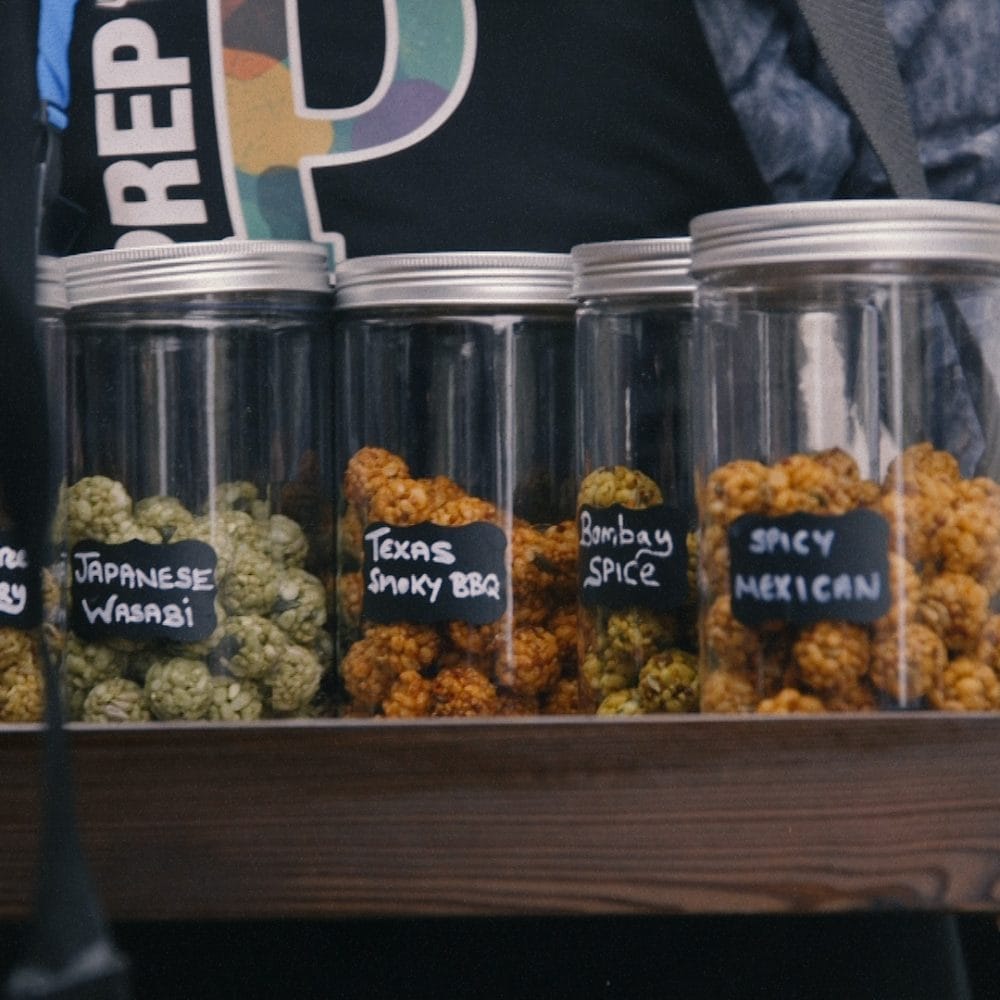
A FoodTruck is suitable for mobile, realistic research formats such as product tests, tastings, concept feedback or direct consumer reactions in a natural usage context.
This depends on the question being asked. Focus groups and interviews are useful for a deeper understanding, concept tests for early validation, and AI-based or synthetic approaches can be used for quick preliminary tests. Qualitative methods primarily help to understand the “why” behind the behavior.