



A city without waste.
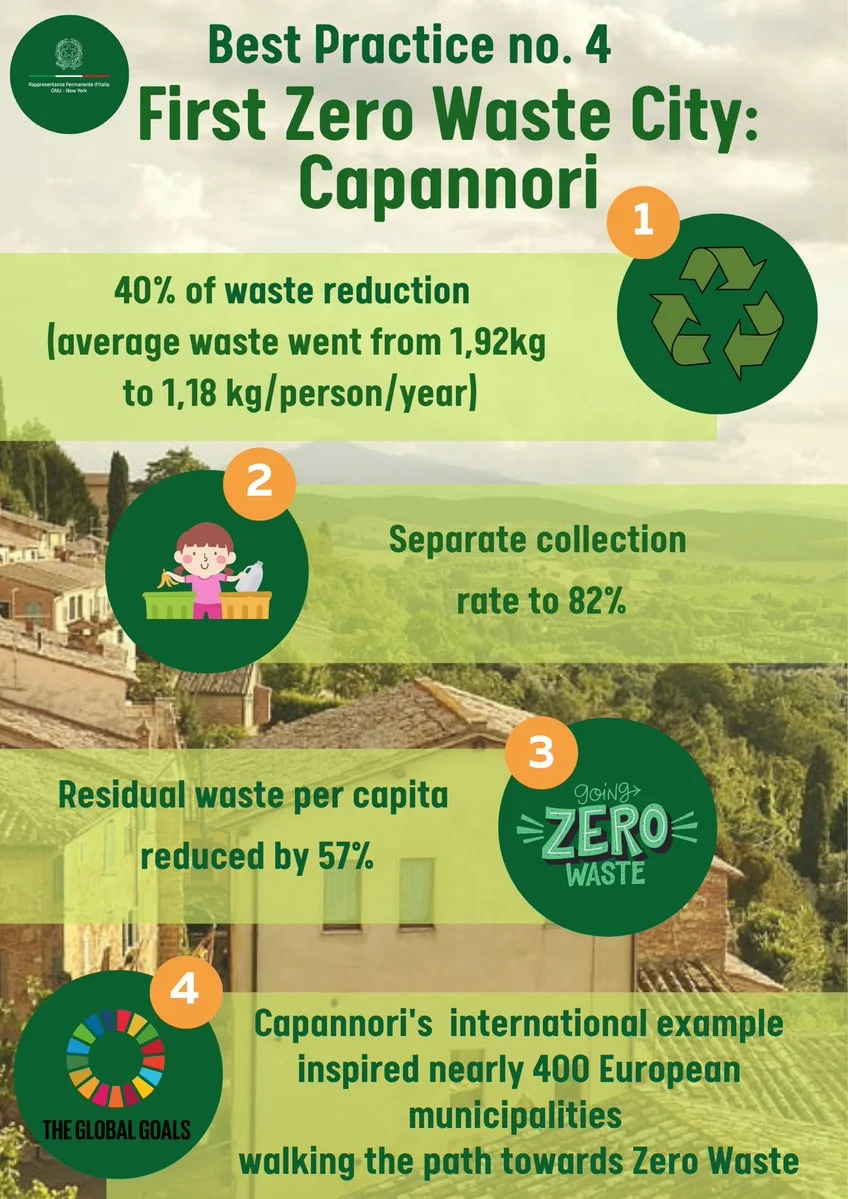
The Italian town of Capannori near Lucca has only 50,000 inhabitants, but has achieved something that many large cities dream of.
After the construction of a waste incineration plant was prevented in 2007, the citizens decided to become the first“Zero Waste City” in Europe. A whole range of measures have been introduced to achieve this: for example, the door-to-door collection, training workshops and a reuse center for used items.
Probably the most important measure, however, was the pay-as-you-throw system: a household’s waste fee is calculated based on the actual amount of waste produced. The results of the trial are impressive – since its introduction, the city’s total waste volume has been reduced by 40% and individual waste charges have also fallen by over 20%.
There are now over 450 cities in Europe that want to emulate Capannori.
However, it should be noted that the term “zero waste city” is somewhat misleading – while the zero waste principle focuses entirely on waste avoidance, the cities are guided by the waste hierarchy and also rely on other approaches such as recycling.
Our conclusion: The example shows that it is perfectly possible to achieve ecological goals through motivated citizens – especially if this also results in economic benefits!